CNC retrofitting: what it is, the benefits, and when it is a better option than buying a new machine

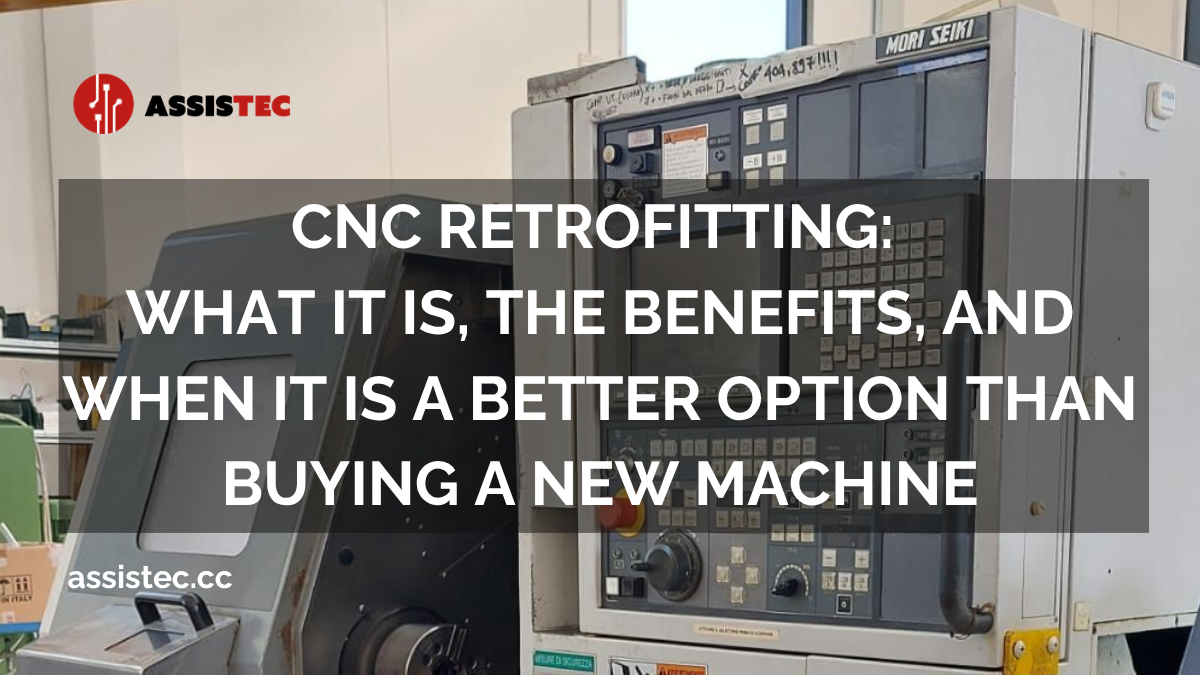
Many companies face the same dilemma: is it better to replace an outdated CNC machine tool, or is it possible to upgrade it whilst retaining the existing structure
In many cases, the answer is a CNC retrofit.
When the machine’s mechanics are still reliable but the electronics, controls or certain components are beginning to show operational limitations, a retrofit can be a practical solution for improving productivity, reliability and operational continuity without having to make the investment required for a new machine tool.
For machine shops, production managers and plant managers, a retrofit often makes it possible to reduce machine downtime, extend the life cycle of equipment and integrate new technologies whilst maintaining the existing infrastructure.
What is a CNC retrofit?
The term CNC retrofit refers to a process of technological modernisation carried out on an existing numerically controlled machine tool. The aim is not simply to repair a fault, but to upgrade obsolete components in order to improve performance, reliability and compatibility with modern production processes.
In practice, retrofitting allows the mechanical structure of the machine – which is often still perfectly serviceable – to be retained by replacing or upgrading electronic components, numerical controls, drives, motors, sensors or safety systems.
It is therefore an intermediate solution between simple maintenance and the purchase of a new CNC machine.
What is the purpose of retrofitting a CNC machine?
A CNC retrofit can serve various purposes, depending on the company’s production requirements.
Among the most common are:
- reduction in machine downtime caused by obsolete components
- improved production reliability
- upgrading of numerical control systems
- increased operational precision
- integration with CNC automation systems
- prepared for interfacing with industrial robots
- improved diagnostics and preventive maintenance
Many companies also opt for retrofitting to make their machines compatible with industrial automation and robotics processes, integrating servo robots for machine tools or automatic loading/unloading systems.
In a manufacturing environment increasingly focused on efficiency, upgrading an existing machine can prove far more strategic than completely replacing the system.
Which components can be upgraded in a CNC retrofit?
One of the main advantages of a CNC retrofit is the ability to carry out targeted upgrades, updating only the components that are truly critical.
Among the components most frequently involved are:
CNC and numerical controls
Numerical control systems are at the heart of the machine. In many retrofit projects, Fanuc upgrades or conversions are carried out to improve reliability, spare parts availability and operational performance.
Drives and motors
Obsolete or end-of-life drives can cause frequent stoppages and maintenance difficulties. Replacing them improves stability and production continuity.
Spindle retrofit
Spindle retrofits are one of the most frequently requested interventions when vibrations, loss of precision or thermal issues occur. In many cases, it is possible to restore the original performance without having to replace the entire machine.
Encoders, sensors and feedback systems
Upgrading detection systems improves the machine’s accuracy, control and diagnostic capabilities.
Electrical panels and wiring
Many older machines have deteriorated wiring or electrical panels that no longer meet modern standards. An upgrade improves safety and reliability.
Interfacing with robots and automation
More and more companies are choosing to integrate machine tool automation systems and industrial robots, even into existing plants. A retrofit can prepare the machine for integration with Fanuc robots or robotic systems dedicated to CNC tending.
When is a CNC retrofit worthwhile?
Not all machines necessarily require a complete replacement.
In many cases, a retrofit is worthwhile when:
- the mechanical structure is still sound
- the problem lies with the electronics or controls
- original spare parts are difficult to source
- downtime costs are rising
- delivery times for new machines are too long
- you wish to integrate automation and robotics
- you want to extend the plant’s service life
From an economic perspective, retrofitting often enables a significant improvement in performance to be achieved at a lower cost than purchasing a new machining centre.
There is also a significant advantage in terms of industrial sustainability. Giving new life to a machine that is still structurally sound helps to reduce waste, limit premature decommissioning and optimise production investments.
CNC retrofit vs revamping: what are the differences?
Retrofits and revamps are often used interchangeably, but they refer to different types of work.
A CNC retrofit mainly involves the technological upgrading of specific machine components, such as electronics, controls, motors or safety systems.
Revamping, on the other hand, is generally a more extensive process that may involve the entire machine, including a complete mechanical overhaul, structural refurbishment and extensive functional upgrades.
In many cases, retrofits and revamps can be integrated within the same industrial refurbishment project.
The advantages of a CNC retrofit over purchasing a new machine
For many companies, the main advantage of a retrofit is financial. However, the benefits are not limited to cost savings.
Among the most tangible advantages are:
- lower initial investment
- shorter downtime compared to a complete replacement
- ability to retain a machine already familiar to operators
- lower training costs
- production continuity
- integration with existing industrial automation
- greater availability of spare parts and technical support
- increased production reliability
From an ROI perspective, a well-designed retrofit can enable a rapid return on investment thanks to reduced downtime, greater production stability and a decrease in unscheduled maintenance.
In many cases, retrofitting also allows for the upgrading of specialised machinery or systems that are difficult to replace with modern standard solutions. One example is our electrical retrofit on a Picchi transfer machine, carried out to improve reliability, operational continuity and the electronic management of the system.
The operational phases of a CNC retrofit
An effective CNC retrofit requires a structured technical approach.
The process generally unfolds in several stages:
Initial technical analysis
The machine’s mechanical, electronic and production conditions are assessed.
Feasibility assessment
The costs, benefits and technical feasibility of the retrofit are analysed in comparison with the purchase of a new system.
Project design
The components to be upgraded, electronic compatibility and integration with any industrial robotic automation systems are defined.
Installation and retrofit
Hardware, software and electrical upgrades are carried out.
Testing and production restart
The machine is tested to verify precision, reliability and operational stability.
Doosan turret retrofit: an example of a project
On certain Doosan turrets, for example, it is possible to carry out targeted electronic and mechanical retrofits to restore reliability and production continuity.
The work may include:
- technical analysis of the turret and subsystems
- replacement or repair of worn components
- restoration of original tolerances
- mechanical adjustments and functional tests
- installation of new encoders and feedback systems
- upgrading of wiring and diagnostic devices
- preparation for interfacing with robots or external systems
In some cases, it is also possible to integrate features related to predictive diagnostics or CNC automation, further improving control over the production process.
Would you like to find out if a CNC retrofit is cost-effective for your machine?
Every machine tool has different characteristics, critical issues and potential. For this reason, before planning an investment, it is essential to carry out a thorough technical assessment.
Assistec supports engineering workshops and manufacturing companies in analysing the feasibility of CNC retrofits, assessing the condition of the machine, cost-effectiveness, and the potential for upgrading and integration with industrial automation and robotics systems.
A technical audit helps determine whether it is actually possible to reduce costs, minimise machine downtime and extend the plant’s lifespan without having to replace the machine tool entirely.
Contact us to book your consultation appointment
FAQ
A CNC retrofit is a technological upgrade that allows an existing machine tool to be modernised by replacing obsolete components.
It serves to improve the machine’s reliability, productivity and operational continuity, reducing the risk of downtime and extending its service life.
It is particularly worthwhile when the machine’s mechanical structure is still sound but the electronics, controls or drives are obsolete or difficult to maintain.
Retrofitting mainly involves targeted technological upgrades, whereas revamping is a more extensive process that may also involve a complete overhaul of the mechanical components.
Numerical control units, drives, motors, spindles, encoders, sensors, electrical cabinets and automation systems.
Yes. Many CNC retrofit projects are also designed to allow integration with servo robots and industrial automation systems.
Recent Posts

-
Technical support for Mazak machines: on-site electronic and mechanical repairs
Mazak machine tools are found in numerous workshops and production departments and, particularly in the case of machines that have been in operation for several years, may require electronic and mechanical repairs to resolve faults, malfunctions or issues related to component wear.
However, a machine stoppage does not always allow the root cause of the problem to be identified immediately.
A fault may affect the control system, a drive or an electronic component, but it may also be due to mechanical elements, the tool changer, the pallet changer system or the machine’s geometric conditions.
For this reason, the ability to carry out an analysis directly at the customer’s premises allows us to assess the machine’s actual behaviour and identify the necessary intervention.
Assistec provides on-site electronic and mechanical support services, including for Mazak machines fitted with Mazatrol 640 and Mitsubishi M64 control systems, drawing on the expertise it has developed in servicing multi-brand CNC machine tools.
-
PLC logic for machine safety is one of the areas that may require attention when an existing machine tool has outdated or inadequate safety functions, or when these functions are no longer suitable for the machine’s current configuration.
However, improving machine safety is not simply a matter of modifying a few lines of PLC code. The process must begin with a risk assessment, followed by identifying the required safety functions, checking the devices already installed and determining how they should interact with the PLC, drives, sensors, interlocks and machine components.
On CNC machine tools, changes to PLC logic may be required, for example, to correctly manage automatic doors, permissive signals, stopping functions, protective devices or newly integrated automation systems.
For this reason, modifying PLC logic should be considered part of a broader machine safety and functional verification process, rather than an isolated software task.
-
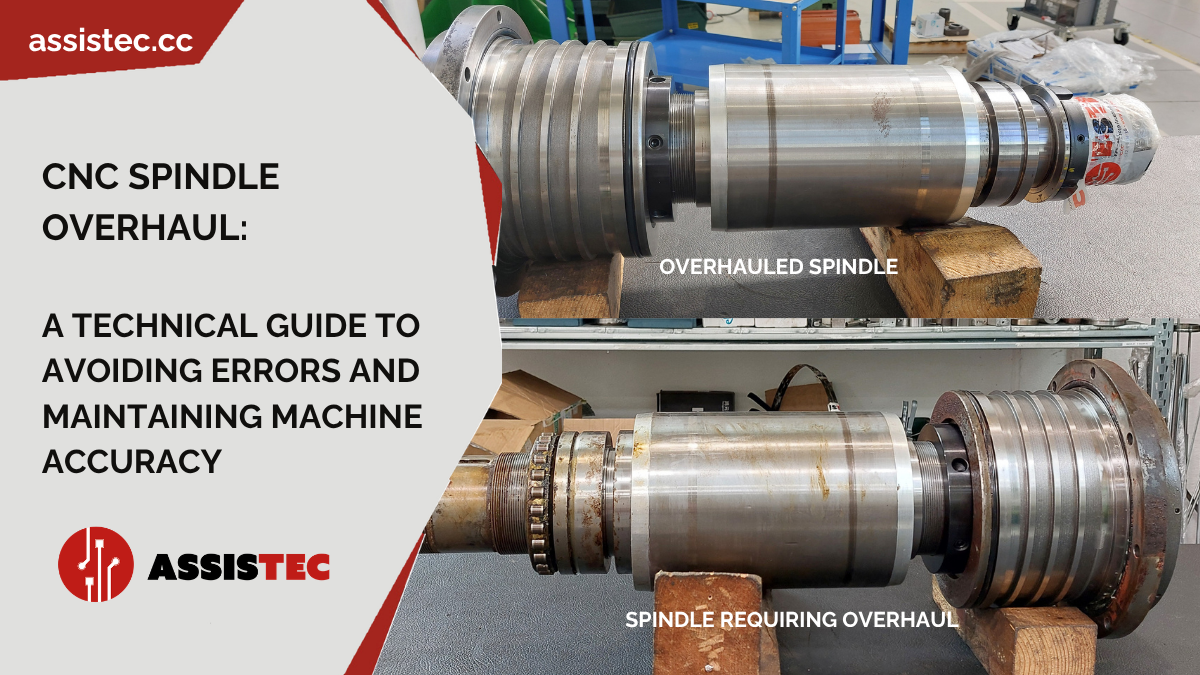
The CNC spindle is one of the most important elements of a machine tool: it is the component that transmits motion to the tool and, together with the machine’s other systems, determines precision, machining quality and production reliability.
When a spindle begins to show signs of wear, the problem is not limited to the component itself. Abnormal vibrations, loss of precision or increased noise levels can, in fact, compromise the entire production process, leading to scrap, premature tool wear and unscheduled machine downtime.
For this reason, the overhaul of CNC spindles should not be regarded as a simple repair job, but as a technical operation aimed at restoring the spindle to its original operating condition and ensuring stability and precision once again.
Relying on a professional service allows the real causes of the problem to be identified, worn components to be replaced and more serious faults that could halt production to be prevented.