Types of CNC machines: applications and differences

Exploring the different types of CNC machines
It's clear that the market for CNC machine tools is just as varied as the tasks these machines have to perform. This is because, with the advent of Industry 4.0 and modern smart factories, these machines have gradually taken on a more predominant role within industries, particularly manufacturing. CNC technology offers efficiency, precision and consistency, which are difficult to achieve with manual machining processes. There are various methods for classifying CNC machines, most of which are based on their design and intended tasks. Among the various types of CNC machines are milling machines, lathes, laser or plasma cutting machines, drilling machines, and grinding machines. They each have their own unique features and functionalities that can be customised using computer-aided design (CAD) and computer-aided manufacturing (CAM) programs, enabling precise control over the movements of cutting tools and workpieces.
CNC milling machines: features and applications
CNC milling machines perform high-precision and versatile operations to remove material from a workpiece and shape it according to specific requirements, also producing intricate and custom shapes. They come in both vertical and horizontal versions and can be outfitted with different types of milling cutter tools, such as end mill cutters, reamers, face milling tools, taps and common cutters. Vertical milling machines feature a vertically oriented spindle that holds and rotates the cutting tool. On the other hand, horizontal milling machines have a horizontally oriented spindle, which enables them to remove material more aggressively and clear away chips more effectively. Horizontal milling machines also have the advantage of accommodating larger workpieces than vertical ones.
CNC lathes: operation and use
The CNC lathe is a highly effective tool that rotates the workpiece around a central axis, cutting it with cutters to remove material and shape it as needed. It can be categorised into three types: turret lathes, motorised lathes and special lathes. Used for various processes like cutting, honing, facing, drilling, turning and knurling, CNC lathes are ideal for producing symmetrical components, but they're not just limited to that. In fact, they are also used to manufacture products such as camshafts, car parts, gun barrels, crankshafts, baseball bats, musical instruments, dining tables and furniture legs.
CNC Lasers: Technologies and Fields of Application
Two types of CNC milling machines equipped with lasers are mainly used for cutting various sheet metals: CO2 and solid-state machines. The highly concentrated beam allows for extremely precise cuts, even more so than plasma cutting. These machines have diverse applications, such as making aerospace parts, car chassis, medical equipment and engraving materials. One notable feature of CNC laser-machined products is their clean, high-quality edges, distinguishing them from products made by other machining processes. This is due to the fact that there is no mechanical contact or force exerted on the material. Consequently, there is no need for additional finishing processes.
Other types of CNC machines: analysis and specifications
As mentioned, there are many different types of CNC machines, each with its own set of applications. In addition to the ones already mentioned, there are also CNC router machines used in carpentry and metalworking workshops that produce carved wooden furniture, mouldings, interior and exterior decorations, door carvings, signage and musical instruments; CNC Electric Discharge Machines (EDM) used in injection moulding, die-casting, punching and prototyping, or CNC grinding machines used in the automotive, aerospace and tool-making industries.
Choose the right CNC machine with Assistec
If your company wants to reap the benefits of Industry 4.0 and advance into the future, Assistec is your ideal technological partner! Situated in the heart of the metalworking district in Reggio Emilia, we have over 25 years of experience in CNC machines and industrial automation, and in providing mechanical and electronic support for machinery. Moreover, we have a business unit dedicated entirely to robotics. We are a young and dynamic company that specialises in troubleshooting and minimising machine downtime.
Find the right CNC machine tool for your needs! Contact us or call +39 0522989436 for more information. One of our operators will contact you with a personalised offer.
Recent Posts

-
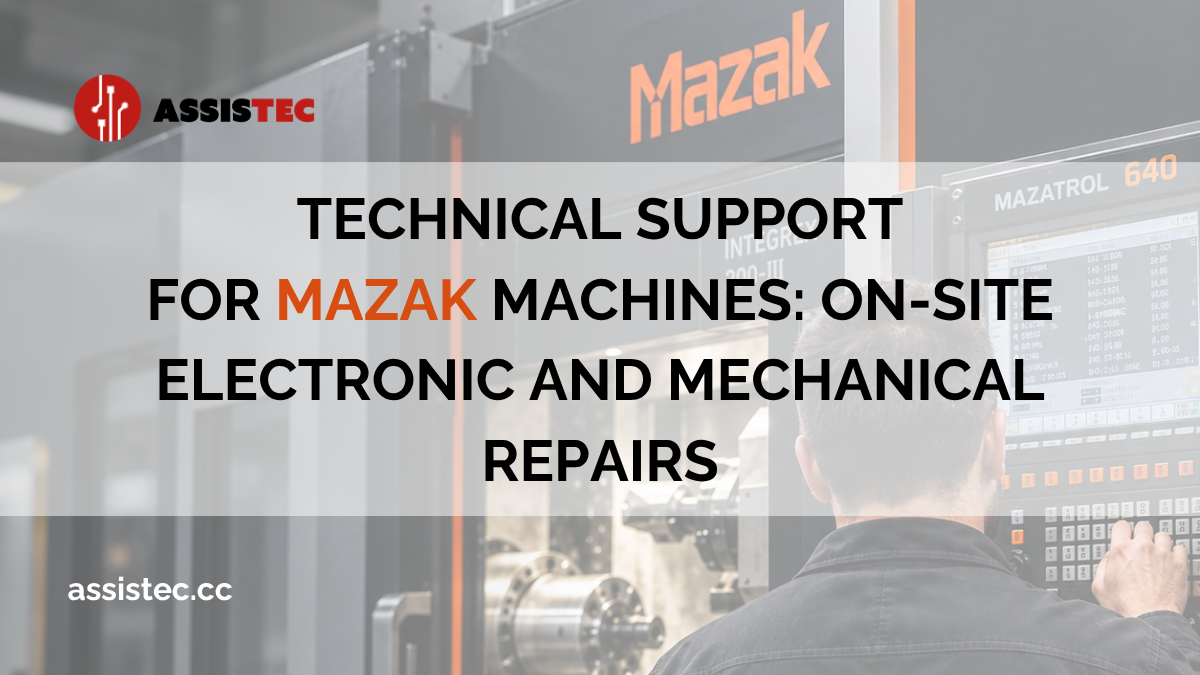
Technical support for Mazak machines: on-site electronic and mechanical repairs
Mazak machine tools are found in numerous workshops and production departments and, particularly in the case of machines that have been in operation for several years, may require electronic and mechanical repairs to resolve faults, malfunctions or issues related to component wear.
However, a machine stoppage does not always allow the root cause of the problem to be identified immediately.
A fault may affect the control system, a drive or an electronic component, but it may also be due to mechanical elements, the tool changer, the pallet changer system or the machine’s geometric conditions.
For this reason, the ability to carry out an analysis directly at the customer’s premises allows us to assess the machine’s actual behaviour and identify the necessary intervention.
Assistec provides on-site electronic and mechanical support services, including for Mazak machines fitted with Mazatrol 640 and Mitsubishi M64 control systems, drawing on the expertise it has developed in servicing multi-brand CNC machine tools.
-
PLC logic for machine safety is one of the areas that may require attention when an existing machine tool has outdated or inadequate safety functions, or when these functions are no longer suitable for the machine’s current configuration.
However, improving machine safety is not simply a matter of modifying a few lines of PLC code. The process must begin with a risk assessment, followed by identifying the required safety functions, checking the devices already installed and determining how they should interact with the PLC, drives, sensors, interlocks and machine components.
On CNC machine tools, changes to PLC logic may be required, for example, to correctly manage automatic doors, permissive signals, stopping functions, protective devices or newly integrated automation systems.
For this reason, modifying PLC logic should be considered part of a broader machine safety and functional verification process, rather than an isolated software task.
-
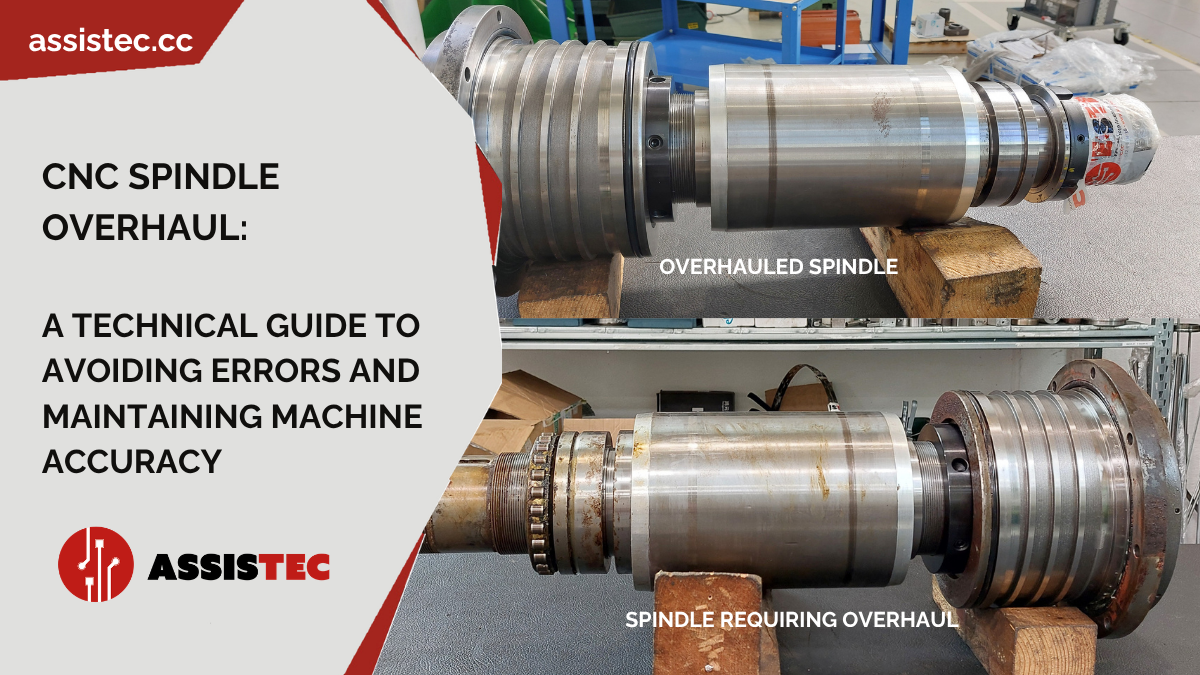
The CNC spindle is one of the most important elements of a machine tool: it is the component that transmits motion to the tool and, together with the machine’s other systems, determines precision, machining quality and production reliability.
When a spindle begins to show signs of wear, the problem is not limited to the component itself. Abnormal vibrations, loss of precision or increased noise levels can, in fact, compromise the entire production process, leading to scrap, premature tool wear and unscheduled machine downtime.
For this reason, the overhaul of CNC spindles should not be regarded as a simple repair job, but as a technical operation aimed at restoring the spindle to its original operating condition and ensuring stability and precision once again.
Relying on a professional service allows the real causes of the problem to be identified, worn components to be replaced and more serious faults that could halt production to be prevented.